



Why Pakistan
Home >> Why Pakistan >> Investment Environment
Why Pakistan
Investment Environment
Pakistan is at the crossroads of South, Central, and West Asia and is becoming a regional economic hub by the creation of an important economic corridor, the China Pakistan Economic Corridor (CPEC) that connects China and Pakistan to Iran, Afghanistan, and Central Asian Republics. Due to enhanced infrastructure by the development of CPEC, Pakistan’s competitiveness has also increased due to the improvement in “infrastructure” pillar in Global Competitiveness Index”.
Pakistan follows liberal investment regime and facilitation being its foremost cornerstones for investors’ confidence and conducive environment to attract local and foreign investment. The Board of Investment (BOI) is mandated to promote, encourage and facilitate both local and foreign investment. Thus, BOI acts as an interface between international and local investors, public and private sector. BOI works for enabling business environments through policy and strategic interventions.
Shifting the investment Narrative
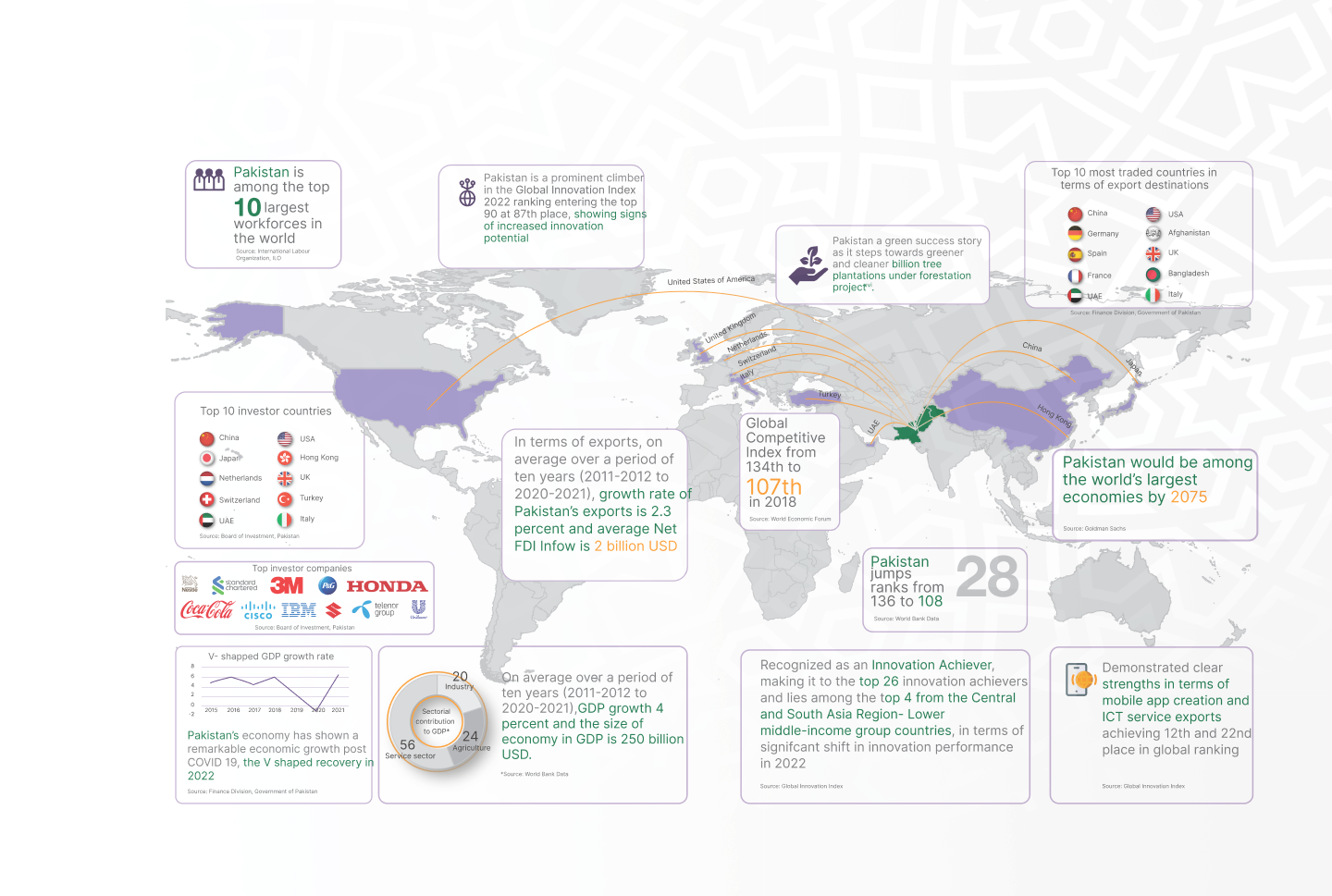
Pakistan welcomes investments into all sectors, unless specifically restricted for reasons of national security and public safety, some examples of which include construction and operation of casinos, manufacturing of consumable alcohol, arms and ammunition, atomic energy, high explosives, currency and minting.

1997
The first Investment Policy was framed by BOI in 1997 which opened all economic sectors including infrastructure, social, and services for foreign investment

2013
The 2013 Policy adopted four guiding principles, namely:
(a) reducing the cost of doing business in Pakistan.
(b) Reducing the processes of doing business.
(c) Ease of doing business with creation of industrial clusters and Special Economic Zones, and (d) linkages of trade, industrial and monetary policies for greater convergence.

2023
PIP 2023 adopts the following guiding principles:
- Stimulate growth, economic recovery and exports
- Sustainable and inclusive economic growth, industry innovation and infrastructure development, addressing the gender gap
- Focus on ease of doing business (e.g. SEZ, reducing regulatory burden, infrastructure development, enhancing competitiveness, linkages between domestic and foreign investors)
- Investment policy coordination between Federal and Provincial authorities
- Promote investment in high quality export-oriented, technology-driven (especially high technology and digital technology).
- Adopt principles of responsible business and investment.
Investment Promotion strategy 2020-23
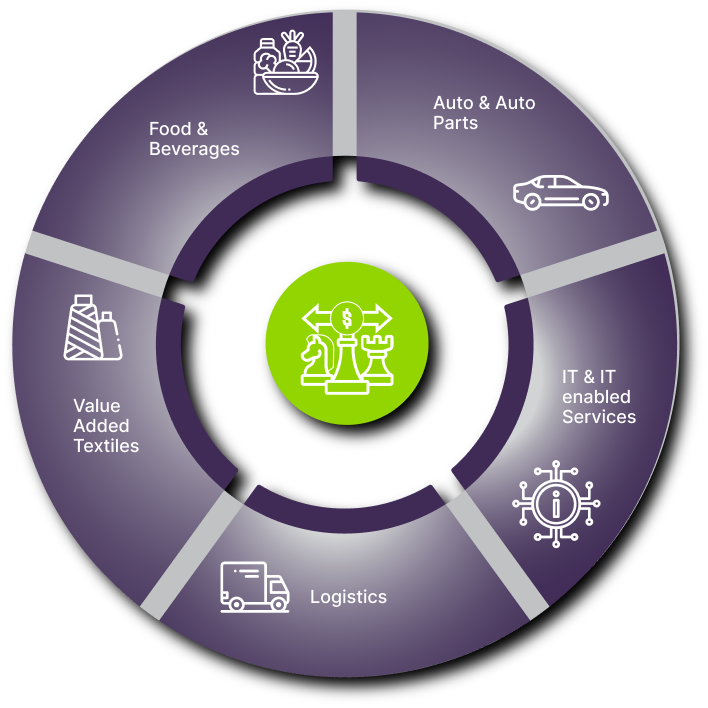
LIBERAL INVESTMENT REGIME AND INCENTIVES

The overarching strategy of PIP 2023 is to establish Pakistan as a destination of choice for FDI in the region, which could enhance Pakistan's participation and contribution in GVCs by employing five investment aspirations.
- Increase economic complexity,
- Creation of high-value jobs,
- Extend domestic linkages,
- Develop new and existing clusters, and
- Improve inclusivity. Based on these aspirations
Pakistan is focused on growth-oriented trade and investment in the country. The Government of Pakistan is committed to contribute to the national economy through trade facilitation and liberalization, improved export competitiveness and reduced the cost of doing business. Cognizant of the challenging investment and trade environment globally, Pakistan is focusing on strengthening its relationships with regional and bilateral trade partners.
Pakistan has signed 31 bilateral investment treaties (BITS) and provides regional access through participation in international organizations, alliances and treaties.

Member state of United Nations (UN)
Member state of Commonwealth of Nations
Member state of the Multilateral Investment Guarantee Agency
Member state of the World Intellectual Property Organization

Member state of Shanghai Cooperation Organisation (SCO)
Member state of Economic Cooperation Organization (ECO)
Member state of Organization of Islamic Cooperation (OIC)
Member state of South Asian Association for Regional Cooperation (SAARC)

Member state of South Asian Free Trade Agreement SAFTA (SAFTA)
Member state of Afghanistan Pakistan Preferential Trade Agreement (APPTA)
Member state of World Trade Organization (WTO)
Cooperation with ASEAN
Pakistan has long-standing cooperation with ASEAN, as the Sectoral Dialogue Partner since 1993, member of the ASEAN Regional Forum (ARF) since 2004, also having acceded to the Treaty of Amity and Cooperation in South East Asia in 2004.
At present, Pakistan is a party to 13 regional trade agreements and 66 Avoidance of Double Taxation Treaties. Pakistan is also a member of the Multilateral Investment Guarantee Agreement. The most significant FTAs include:
Member state of United Nations (UN)
Member state of Commonwealth of Nations